Analyst Questions Flames' Cooley Over Personality in High-Pressure Moments
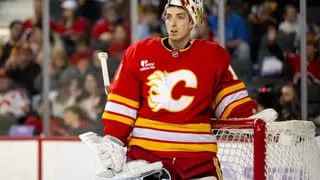
Calgary Flames goaltender Devin Cooley, known for his stellar 1.50 GAA and .954 SV% over a four-game win streak, has drawn attention not just for his play but also for his candid, humorous postgame interviews. While fans embrace his authenticity, TSN analyst Jeff O’Neill expresses concern that such unfiltered commentary could become problematic if Cooley faces prolonged struggles.
Calgary Flames goaltender Devin Cooley has emerged as a standout performer during a four-game winning streak from October 18 to October 27, 2026, posting a 1.50 GAA and .954 SV%, earning him NHL Second Star of the Week honors. His recent performances have drawn widespread attention not only for his statistical excellence but also for his unfiltered postgame interviews, where he speaks candidly about his mental state—such as describing his play as “unconscious brain” and referencing existential themes like mortality. These remarks, which first gained traction during a 2023-24 stint with the San Jose Sharks and continued through his rookie season in 2025-26, have become a hallmark of his public persona. Despite finishing last in the NHL standings that season with only 34 wins, Cooley maintained this authentic style, suggesting his openness is not a product of success but a consistent trait. TSN analyst Jeff O’Neill has voiced concern that such candidness could backfire during future losing streaks, when media scrutiny intensifies and comments may be reinterpreted negatively. While O’Neill acknowledges enjoying Cooley’s honesty, he questions how public perception might shift if the Flames falter. The Flames organization, fans, and media have embraced Cooley’s authenticity, but the broader hockey ecosystem—particularly broadcasters and team management—may face pressure to manage such personalities during downturns.
Cooley’s case reflects a growing tension in professional sports between athlete authenticity and institutional risk management. In an era where social media amplifies every statement, players who deviate from scripted narratives may attract both fan loyalty and heightened scrutiny when performance dips. This dynamic echoes the 2016-17 career of former NHL player Ryan Callahan, whose candid interviews were praised during his prime but later scrutinized during injury-related struggles. Cooley’s situation could influence how teams approach media training for goaltenders—positions historically shielded from public exposure due to their high-pressure nature. If O’Neill’s concerns gain traction, we may see more structured guidance on player commentary, potentially limiting the rawness that fans value. Conversely, if Cooley remains unfiltered through adversity, it could reinforce a cultural shift toward valuing mental transparency in elite athletes. The broader impact may extend to sports med