Barcelona Accepts Raphinha’s Brazil Duty Despite Injury Concerns
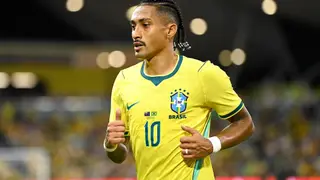
Barcelona manager Hansi Flick acknowledged the club's inability to prevent Raphinha’s call-up for Brazil’s upcoming friendlies against Japan and Singapore. The player recently returned from an injury sustained during a prior international trip, raising concerns about his fitness. Flick emphasized that while the long travel is not ideal, the club respects national team obligations and will manage Raphinha’s playing time to minimize risk.
Barcelona has confirmed that Raphinha, their Brazilian international captain, will travel to Japan and Singapore for Brazil’s upcoming friendlies in November 2026, despite lingering injury concerns. The player recently returned from a prior international trip to Australia on September 25, 2026, where he sustained an injury during a match against the Socceroos at Queensland Country Bank Stadium. Barcelona manager Hansi Flick acknowledged the club’s inability to prevent the call-up, stating that national team duties are beyond their control. He emphasized that while the long travel is not ideal—especially given Raphinha’s recent physical setback—the club respects the player’s commitment to Brazil. Flick noted that Deco, the club’s sporting director, has discussed the situation, and both parties agree on the need to manage Raphinha’s playing time carefully to avoid further setbacks. The upcoming matches are part of Brazil’s post-World Cup preparation, with the team seeking to integrate new players and test tactical setups ahead of future competitions.
The background lies in the recurring tension between club and national team schedules, particularly for star players like Raphinha who hold dual responsibilities. His injury during a prior international trip underscores the physical toll of frequent travel and high-intensity matches. Barcelona’s stance reflects a broader institutional reality: while clubs may prefer to rest key players, they cannot override FIFA or confederation c
Raphinha’s call-up highlights the ongoing strain between club football and national team obligations, a dynamic that could affect player longevity and team performance across Europe. With top-tier athletes like Raphinha frequently pulled into international duty, clubs face increased risks of injury and fatigue, potentially undermining their competitive edge in domestic and continental tournaments. This situation may prompt greater scrutiny of FIFA’s scheduling policies, especially around post-World Cup friendlies, which often occur during congested club seasons. Comparable cases include the 2018 World Cup, when several players returned injured from international duty, impacting their clubs’ campaigns. The broader impact could be a shift toward more coordinated player management between clubs and national teams, possibly through formalized rest protocols or reduced non-competitive fixtures. What may emerge is increased pressure on governing bodies to balance global football’s demands wi