Sharks' Early Season Slide Sparks Debate Over Coaching vs. Roster Limitations
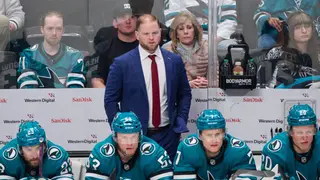
The San Jose Sharks have dropped four of their last five games despite a promising start, raising questions about whether head coach Ryan Warsofsky's defensive system or the team's injury-plagued roster is to blame. Captain Macklin Celebrini publicly disagreed with Warsofsky’s claim of poor player buy-in, highlighting internal tension. The team has managed only five goals in that stretch, underscoring offensive struggles despite having a young, skilled core.
The San Jose Sharks have dropped four of their last five games, including a 2-1 loss to the Calgary Flames on November 4, 2026, at SAP Center, marking their seventh win in 15 games (7–7–1). During this stretch, they’ve managed just five goals, with Sam Dickinson scoring the lone tally in the recent defeat. The team’s offensive struggles are particularly stark given their young, high-skill roster, which includes captain Macklin Celebrini and Will Smith, the only other forward with double-digit points. Head coach Ryan Warsofsky has come under scrutiny after publicly citing a lack of player buy-in following the Halloween loss, a comment that was directly challenged by Celebrini, who instead attributed the team’s issues to low energy and poor cohesion. This public disagreement between coach and captain signals deeper internal tensions. The Sharks’ struggles are compounded by significant injuries: forward Alexander Wennberg and winger Igor Chernyshov remain sidelined, both key contributors whose absence has disrupted chemistry and weakened a system reliant on two-way depth. Warsofsky, who was recently extended in his role, implemented a defensive-first structure after last season’s 30th-ranked defense, but the rigidity of that system may be stifling the team’s offensive potential. The core issue remains unresolved: whether the coach’s system is misaligned with the roster’s capabilities or if the injuries and youth are simply exposing growing pains in a transitional phase.
The Sharks’ current dilemma reflects a broader tension across the NHL between coaching philosophy and roster development, particularly in teams rebuilding around young talent. When a head coach and franchise player publicly disagree on the root of team struggles, it can erode locker room unity and signal instability to fans, media, and front office decision-makers. The situation may influence how other franchises approach coaching contracts during early rebuilds—balancing patience with accountability. A comparable case is the 2018–19 Toronto Maple Leafs, where a high-profile coach faced pressure despite strong individual talent, ultimately leading to a mid-season coaching change. In San Jose’s case, the outcome could shape how organizations evaluate whether to adjust systems or wait for player development. If Warsofsky adapts by loosening his defensive structure and integrating younger players more fluidly, it may preserve stability; if not, pressure could mount quickly. The broader im